If you manage a commercial building, residential property, warehouse, school, healthcare facility, hotel or industrial site in the UAE, you have probably come across the terms "fire risk assessment" and "fire safety audit". They sound similar — and both involve identifying fire-safety issues — but they are not necessarily the same exercise.
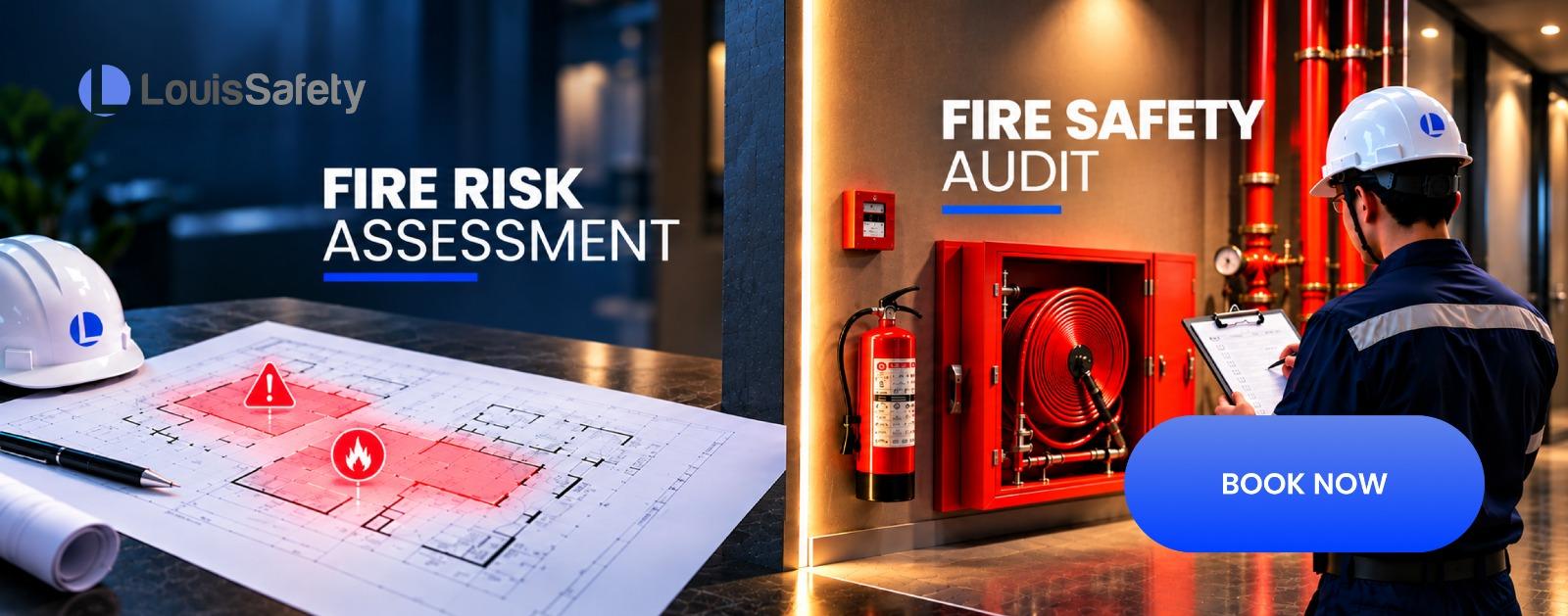
Understanding the difference matters because each serves a different purpose. A fire risk assessment focuses on identifying fire hazards, evaluating who or what could be harmed, assessing the level of risk and determining appropriate control measures. A fire safety audit is generally broader and more compliance-focused: it examines whether fire-safety systems, procedures, documentation, maintenance and management arrangements are being implemented effectively and consistently.
Knowing which assessment is appropriate can save time, improve safety and support better compliance decisions.
What is a fire risk assessment?
A fire risk assessment is a structured examination of a building, its activities, hazards, occupants and existing fire precautions. The objective is to understand:
- what could cause a fire;
- who could be exposed;
- how serious the consequences could be;
- what controls are already in place; and
- what additional measures are required.
Rather than focusing only on fire protection equipment, a risk assessment considers the interaction between people, buildings, activities, combustible materials, ignition sources, emergency procedures and existing fire protection measures.
What does a fire risk assessment look at?
Depending on the property, the assessment may examine:
- ignition sources;
- electrical hazards;
- flammable and combustible materials;
- storage arrangements;
- fire load;
- cooking and heating equipment;
- hot-work activities;
- fire detection and alarm systems;
- fire extinguishers;
- sprinkler and suppression systems;
- emergency lighting;
- escape routes;
- fire doors and compartmentation;
- occupant characteristics;
- emergency procedures;
- maintenance arrangements; and
- previous incidents and known deficiencies.
A good fire risk assessment produces practical recommendations that help reduce the likelihood and consequences of fire.
What is a fire safety audit?
A fire safety audit is a systematic review of a property's fire-safety arrangements against applicable standards, procedures, policies and management controls.
In simple terms, a fire risk assessment asks: "What could go wrong and how can we reduce the risk?" A fire safety audit asks: "Are the required fire-safety arrangements actually in place, functioning correctly, documented and being managed effectively?"
An audit may review whether:
- fire extinguishers are properly maintained;
- fire alarm systems have valid service records;
- emergency exits remain accessible;
- fire doors function correctly;
- fire pumps are inspected and tested;
- fire drills are documented;
- corrective actions are completed;
- required certificates remain valid;
- inspection records are maintained; and
- fire-safety responsibilities are clearly assigned.
Fire risk assessment vs fire safety audit: the key difference
Although both support fire safety, their objectives are different.
| Fire risk assessment | Fire safety audit |
|---|---|
| Identifies hazards and risks | Reviews compliance and implementation |
| Evaluates likelihood and consequences | Verifies existing controls |
| Focuses on reducing risk | Focuses on management effectiveness |
| Reviews hazards and occupants | Reviews systems, records and procedures |
| Produces risk-control recommendations | Produces audit findings and corrective actions |
| Supports planning and design | Supports ongoing compliance |
There is often overlap between the two, but they should not be treated as interchangeable.
Why fire risk assessment matters in the UAE
Every building presents different fire hazards. A warehouse storing combustible materials presents different risks from a hospital, hotel, shopping mall, school or office building.
A fire risk assessment should therefore reflect the actual conditions of the property instead of relying on generic checklists. Risk assessments become particularly valuable where there are:
- high occupant numbers;
- vulnerable occupants;
- high fire loads;
- flammable materials;
- industrial processes;
- large storage areas;
- commercial kitchens;
- electrical or server rooms;
- laboratories;
- ongoing construction or modifications; or
- changes in occupancy.
Identifying these risks early allows owners to implement appropriate control measures before incidents occur.
When should you carry out a fire risk assessment?
A fire risk assessment should be reviewed whenever significant changes occur.
After a change of use. Different occupancies introduce different hazards and evacuation requirements.
After renovation or fit-out. New layouts, equipment, storage or partitions may affect fire safety arrangements.
When fire loads increase. Additional combustible materials can significantly increase fire risk.
After a fire or near miss. Incidents provide valuable lessons and should trigger a review of existing controls.
During construction or modification. Construction work introduces temporary hazards such as hot work, temporary electrical installations and altered escape routes, which may call for temporary fire protection measures.
When do you need a fire safety audit?
A fire safety audit is particularly useful when you want to verify that your fire-safety programme is functioning effectively. Consider an audit when:
- reviewing overall building compliance;
- management requests an independent assessment;
- fire-safety findings continue to reoccur;
- maintenance records are incomplete;
- fire protection systems require review;
- preparing for authority inspections;
- renewing insurance;
- purchasing or leasing a property;
- following major renovations; or
- carrying out annual compliance reviews.
Unlike a risk assessment, an audit focuses heavily on verifying whether existing arrangements are actually being maintained and managed.
Can you carry out both together?
Yes. Many organisations conduct a fire risk assessment and a fire safety audit at the same time.
While the risk assessment identifies hazards and evaluates potential risks, the audit confirms whether management systems, maintenance programmes, documentation and operational controls are working effectively. Together they provide a more complete understanding of both risk and compliance, helping organisations prioritise improvements more effectively.
Common findings during fire assessments and audits
Many fire-safety reviews identify recurring issues that can compromise safety if left unresolved. Common findings include:
- blocked escape routes;
- fire doors wedged open;
- expired fire extinguishers;
- missing maintenance records;
- faulty emergency lighting;
- fire alarm faults;
- damaged exit signage;
- poor housekeeping;
- combustible materials stored incorrectly;
- incomplete evacuation procedures;
- overloaded electrical circuits; and
- missing staff training records.
Addressing these issues promptly helps improve both safety and operational resilience — and avoids the far higher cost of non-compliance.
Benefits for building owners
Whether you carry out a fire risk assessment or a fire safety audit, both deliver value:
- improved occupant safety;
- better identification of fire hazards;
- stronger emergency preparedness;
- more effective maintenance planning;
- improved regulatory compliance;
- better documentation and record keeping;
- reduced business interruption;
- support for insurance and management reviews;
- prioritised corrective actions; and
- greater confidence in existing fire protection systems.
Rather than viewing these assessments as compliance exercises alone, building owners should see them as part of an ongoing fire-safety management strategy.
Which one do you need?
The answer depends on your objective.
A fire risk assessment is usually the better option when you want to identify hazards, evaluate risks or review changes within the property.
A fire safety audit is more appropriate when you want to verify compliance, review management systems, examine maintenance records or confirm that fire-safety arrangements continue to operate effectively.
In many cases, conducting both provides the most comprehensive understanding of a property's fire-safety performance.
Frequently asked questions
Is a fire risk assessment the same as a fire safety audit?
No. A fire risk assessment identifies hazards and evaluates risk, while a fire safety audit verifies that fire-safety arrangements are being maintained and managed effectively.
How often should a fire risk assessment be reviewed?
It should be reviewed whenever there are significant changes to the building, occupancy or operations, or following a fire or major incident.
Who should conduct a fire risk assessment?
Competent fire-safety professionals with appropriate knowledge and experience should carry out assessments based on the property's activities and associated fire risks.
Can one report include both a fire risk assessment and a fire safety audit?
Yes. Many organisations combine both activities to obtain a comprehensive understanding of their fire-safety performance.
What documents are usually reviewed during a fire safety audit?
Typical documents include maintenance records, inspection reports, fire drill records, training records, system certificates, emergency procedures and corrective-action reports.
Strengthen your fire-safety management programme
Although the terms are often used interchangeably, fire risk assessments and fire safety audits serve different purposes.
A fire risk assessment helps identify hazards, evaluate risks and recommend practical control measures to reduce the likelihood and consequences of fire. A fire safety audit verifies whether fire-safety systems, maintenance programmes, documentation and management arrangements are functioning effectively and meeting applicable requirements.
Together, they help organisations create safer buildings, improve operational resilience and support ongoing compliance.
Louis Fire & Safety provides fire risk assessments, fire safety audits, inspections, preventive maintenance and fire protection solutions for commercial, industrial, residential, healthcare, hospitality, educational and government facilities across Abu Dhabi and the UAE. Contact our team to discuss your fire risk assessment or fire safety audit requirements.